
Every observant Jew begins and ends the day with the same words.
Shema Yisrael, Adonai Eloheinu, Adonai Echad.
"Hear, O Israel: The LORD our our God, the LORD is one and Only" (Deuteronomy 6:4).
For many Christians, the Shema functions as an affirmation of monotheism, a declaration that there is only one God. The claim is accurate and radically incomplete. The Shema is the Torah's blueprint for forming a human being.
The difficulty begins with translation. English readers encounter the command "Hear, O Israel" and understand hearing as the passive act of perceiving sound. The Hebrew verb שמע (shama) carries a far wider field of meaning. Throughout the Hebrew Bible it carries listening attentively, receiving, taking to heart, and responding faithfully. It is hearing that changes the hearer.
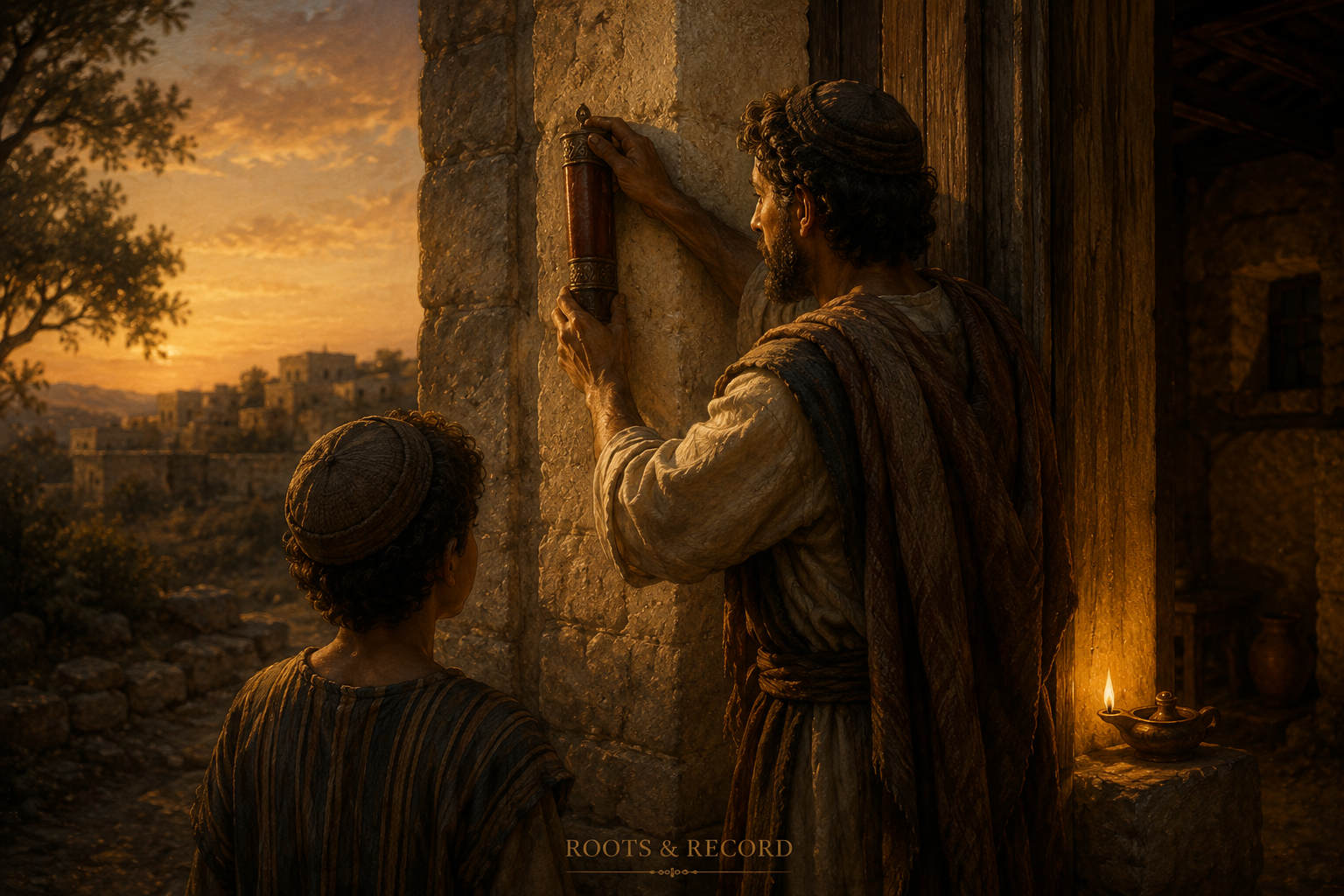
The Shema does not end with hearing. Moses continues at once: "And these words, which I command thee this day, shall be in thine heart" (Deuteronomy 6:6). Before the words are placed on the lips of children, before they are bound upon the hand or written upon the doorposts of a house, they rest first upon the heart. The external practices function as instruments for cultivating that inward devotion.
This movement, from hearing to the heart, forms one of the great themes of Deuteronomy. Again and again Moses urges Israel to hear, to learn, to guard, and finally to do. The order is deliberate. Performance without formation produces empty ritual, while formation produces faithful obedience. Moses prepares Israel to become the kind of people for whom covenant faithfulness runs second nature, a deeper aim than the mere keeping of commandments.
The Gospels build on this foundation. When Jesus is asked to identify the greatest commandment, He answers by quoting the Shema (Mark 12:29–30). The heart of His teaching begins with the heart of Deuteronomy. His repeated emphasis on the condition of the heart, the good tree bearing good fruit, the treasure stored within, the seed received into good soil, echoes Moses' conviction that lasting obedience begins long before an action is performed. It begins with what has been planted within.
The prophets carry the same argument forward. Jeremiah looks toward a renewed covenant and names it a relocation: the same instruction moving from stone into the human heart. "I will put my law in their inward parts, and write it in their hearts" (Jeremiah 31:33). The Hebrew behind "law" is torah, instruction or teaching, a richer word than the English rendering preserves. Jeremiah promises the deeper formation of that instruction, the Torah once written on stone now engraved upon the inner life of God's people.
The apostle Paul remains within this same stream centuries later. He writes, "The word is nigh thee, even in thy mouth, and in thy heart" (Romans 10:8), echoing Moses' language in Deuteronomy almost word for word: "the word is very nigh unto thee, in thy mouth, and in thy heart, that thou mayest do it" (Deuteronomy 30:14). Paul inherits a theology of inward faith already fully formed in Moses. The language of the heart belongs to the covenant from the beginning, carried forward through the Epistles rather than invented within them.
The Torah's concern with hearing runs this deep. God desires a people whose hearts have been shaped by His words, whose homes become schools of covenant practice, and whose children inherit living faith alongside inherited custom. The Shema functions as Judaism's central prayer and as Scripture's curriculum for forming human beings.
The Bible's strategy for holiness runs on formation before behavior, almost without exception the same progression across every generation. God speaks; His people hear; His words settle upon the heart; the heart shapes the life; the life shapes the next. The covenant survives because it is carried faithfully from heart to heart.
Sources
Primary Texts
Deuteronomy 6:4, 6:6 (KJV)
Deuteronomy 30:14 (KJV)
Jeremiah 31:33 (KJV)
Mark 12:29–30 (KJV). Bible Gateway.
Romans 10:8 (KJV)


