
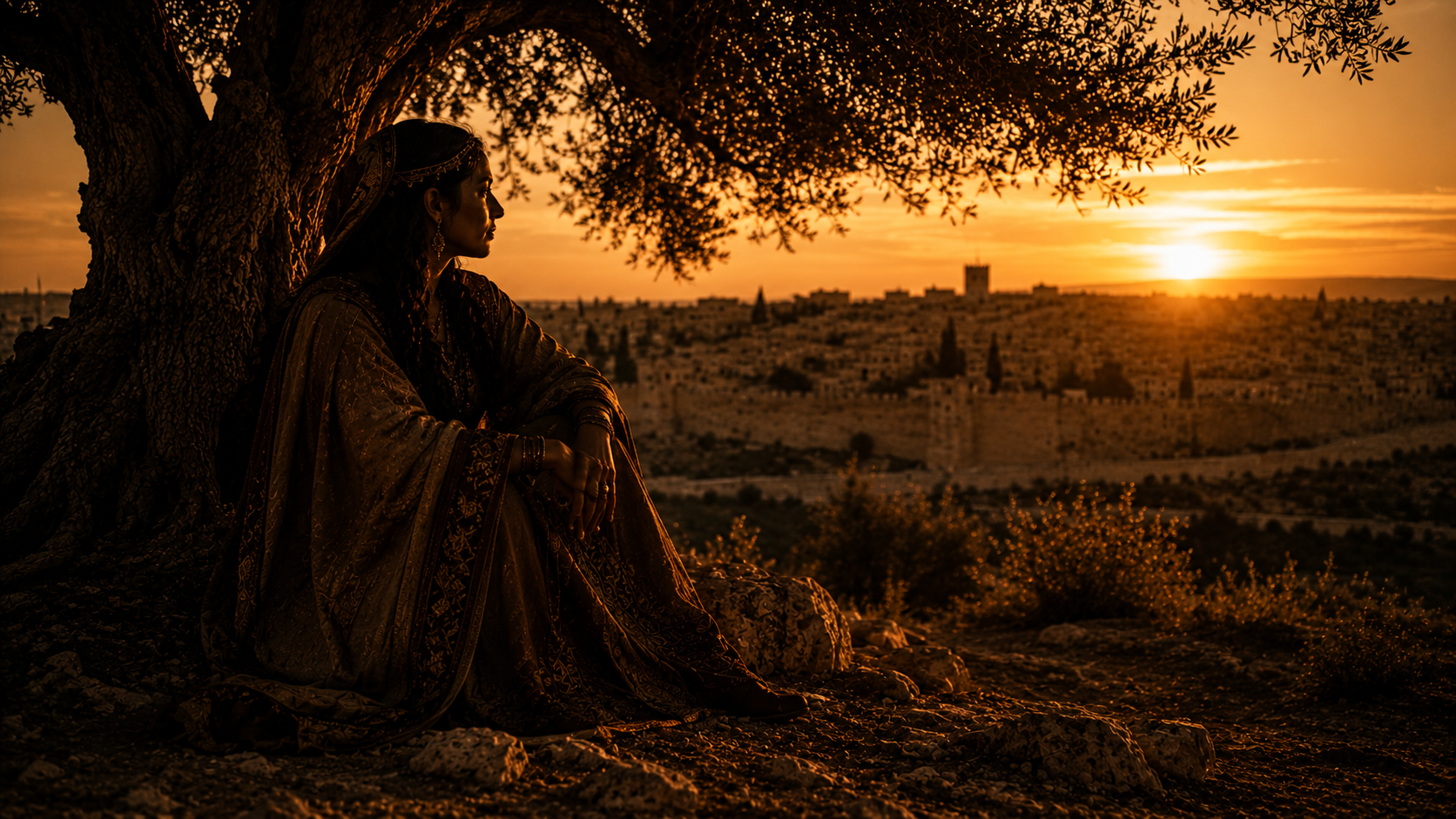
Hava
A section of Roots & Record on the women of the Judeo-Christian inheritance — their texts, their roles, and the long distance between what Scripture says and what tradition made of it.
Every ancient civilisation produced an account of women. The accounts are consistent: women as property, as danger, as the occasion of male weakness. The Hebrew Bible does something else. Deborah commands armies. Miriam leads the first act of communal worship in the biblical narrative. Ruth preserves the Davidic line. Esther saves her people. Rahab — a Canaanite outsider — earns a place in the genealogy of Jesus. To Mary Magdalene the risen Jesus first appears. Priscilla teaches. Phoebe leads. Junia is named among the apostles. The interpreters who followed were not reading carelessly — they were reading under siege, in worlds where the protection of religious life demanded structures that later generations, without that context, mistook for the tradition's actual posture toward women. It was not. The texts say otherwise.
This section takes its name from the first woman Scripture names. Adam calls her Chavah — from chayah, to live — and names her em kol chai: the mother of all living. Scripture gave her the most expansive possible identity. Hava — חַוָּה — reads the tradition's women the way their own texts do: without reduction, without apology, and without the layers of interpretation that buried what was always there.