The biblical record contains over one hundred and fifty named women and several hundred more who shaped its narratives without being named. They span every role the ancient world permitted and several it did not: matriarchs and midwives, judges and queens, prophets and merchants, the faithful and the corrupt, the celebrated and the forgotten. To read them together, across the full span of Scripture, from Genesis to the Epistles, is to encounter a tradition whose treatment of women is more varied, more honest, and more consequential than its reputation often suggests.
The tradition does not diminish these women by giving them full human weight. It takes them seriously because of it. What follows is a reading of the record on its own terms, without flattening its characters into types, and without mistaking complexity for diminishment.
In the Beginning
Eve is the first named human being in Scripture. Adam calls her Chavah, the Hebrew name meaning the living one, the mother of all living, and gives her this name after the events of the third chapter of Genesis. Whatever theological weight those events carry, the name carries the most expansive possible identity: the source from which all human life proceeds, and a commemoration of what every human being who has ever lived owes to her existence.
Sarah is named alongside Abraham with the same deliberateness. Her name change from Sarai to Sarah mirrors his, given in the same divine encounter, and carries the same scope: princess of her household becomes princess of nations. The road to that identity is not smooth. She navigates barrenness, displacement, and the consequences of her own decisions with a persistence the narrative records honestly. When she laughs at the promise of a son, God rebukes her directly: "Nay; but thou didst laugh" (Genesis 18:15). The rebuke does not diminish her. She is still the one through whom the covenant line passes, still the mother of the people that bears Abraham's name, still the woman whose faith the epistle to the Hebrews holds up as a model. She persisted and stayed the course through everything the narrative threw at her, and the tradition remembers her as the matriarch of everything that follows.
Hagar, Sarah's Egyptian servant, is a more complicated figure than devotional readings often allow. The text suggests she did not handle her pregnancy with humility: when she conceived, she looked on her mistress with contempt, provoking the conflict that led to her first expulsion (Genesis 16:4). The text presents her as a human figure rather than an innocent one, with failures of her own. And the text, without resolving the moral complexity of her situation, gives her something remarkable: a direct divine encounter in the wilderness, a personal promise about her son's future, and a name for God that appears nowhere else in Scripture. She calls him El Roi, the God who sees. Whatever her failures, the text sees her clearly and records her encounter with God in full.
Rebekah exercises decisive agency at every turn: she chooses to leave her family for a man she has never met, receives a divine oracle about her sons before they are born, and acts on that oracle with a clarity the narrative records without softening. Her methods are morally contested; her influence on what follows is total. Rachel is the great love of Jacob's life and one of the most fully drawn women in Genesis. She arrives with beauty, wit, and fierce longing; her grief over her barrenness while her sister Leah bears son after son is rendered with an intimacy the text rarely gives to suffering: "Give me children, or else I die" (Genesis 30:1). She dies giving birth to Benjamin, the last of the twelve, naming him with her final breath. Her death and her burial on the road to Bethlehem become the geography of Israel's grief. Centuries later, Jeremiah hears her voice from the grave: "Rahel weeping for her children refused to be comforted for her children, because they were not" (Jeremiah 31:15), mourning the exiles carried off to Babylon. Matthew hears the same voice again at the massacre of the innocents, the children of Bethlehem killed in the shadow of her tomb (Matthew 2:18). A woman dead for a thousand years becomes the emotional voice of Israel's darkest moments. Leah, unloved and persistent, bears six of the twelve tribes and is buried alongside the patriarchs in the cave of Machpelah. The matriarchal line forms the foundation on which Israel's formation rests.
Between Egypt and the Wilderness
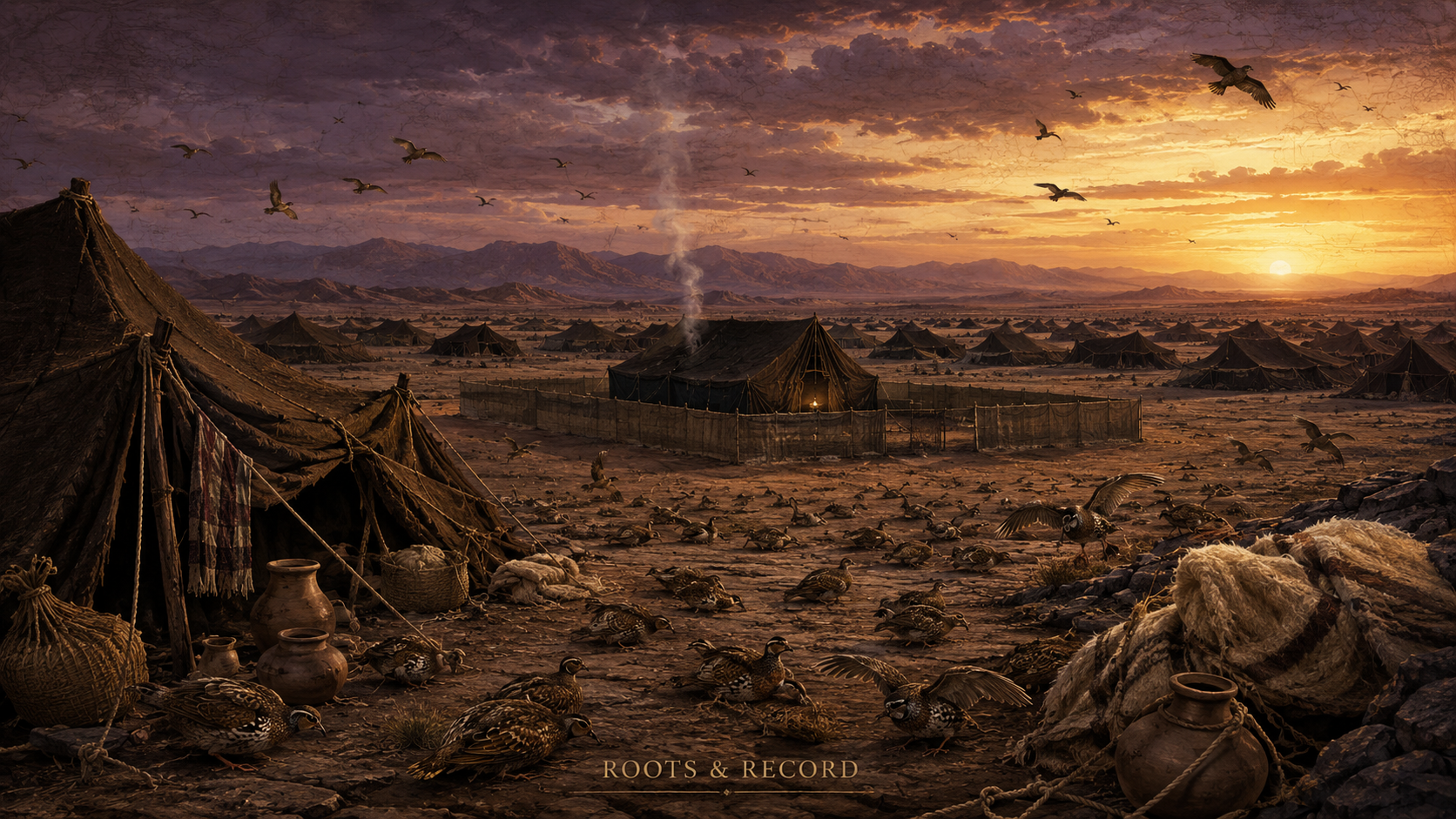
The Exodus begins with women. Shiphrah and Puah, the Hebrew midwives, are the first people in the biblical narrative to perform an act of civil disobedience, defying Pharaoh's order to kill Hebrew male infants at personal risk. When Pharaoh summons them to account, they answer him to his face. Their names are recorded; Pharaoh's is not. Jochebed, Moses's mother, places her infant son in a basket on the Nile in an act of desperate intelligence. His sister, later named Miriam, watches from the bank, negotiates with Pharaoh's daughter, and arranges for their own mother to nurse him. The rescue of Moses is engineered entirely by women.
Miriam leads the women of Israel in song and dance at the crossing of the sea, the first recorded act of communal worship in the biblical narrative, and is named alongside Moses and Aaron as one of the three leaders of the Exodus generation (Micah 6:4). Her later conflict with Moses costs her dearly; she is struck with leprosy and excluded from the camp for seven days. The text does not protect her from the consequence. It also records that the people did not move on until she was restored: the entire congregation waited. Zipporah, Moses's Midianite wife, performs a circumcision that saves Moses's life in one of the most enigmatic passages in the Pentateuch, acting with a decisiveness the text records without fully explaining.
The daughters of Zelophehad, Mahlah, Noah, Hoglah, Milcah, and Tirzah, bring a legal case before Moses, Eleazar the priest, and the entire assembled congregation of Israel. Their father has died without sons; they argue that his name should not disappear from his clan for that reason alone. Moses brings the case before God. God rules in their favor, and the ruling becomes a standing legal precedent in Israel (Numbers 27:1–11). Five women changed Israelite inheritance law by making an argument in open court.
The Period of the Judges
Deborah holds simultaneous authority as prophet and judge over all Israel, the only figure in the book of Judges who holds both offices. When Barak refuses to lead the army into battle without her, she agrees to go and tells him plainly that the honor of the victory will fall to a woman. It does. Jael, a Kenite woman with no stake in the Israelite military campaign, kills Sisera, the Canaanite commander, while he sleeps in her tent. The Song of Deborah, one of the oldest poems in the Hebrew Bible, celebrates both women by name. Jael is called "blessed above women in the tent" (Judges 5:24).
The daughter of Jephthah is unnamed, which is itself significant: the tradition remembered her father's rash vow and forgot her name. She faces her fate with a composure the narrative mourns without flinching. Delilah is frequently reduced to a symbol of treachery. The text is more precise: she was hired, she was persistent, and Samson told her the truth after seven requests. The moral complexity belongs to both of them equally. The wise woman of Abel appears in a single episode in 2 Samuel: when Joab besieges her city, she negotiates with him directly from the wall, brokers a settlement, and saves her entire city from destruction. She is unnamed. Her city survives because of her.
The Monarchy
Hannah's prayer before the birth of Samuel is one of the great prayers of the Hebrew Bible. Luke draws on it directly as the template for Mary's Magnificat: a barren woman's anguish becomes the theological architecture for the announcement of Jesus. Abigail rides out to intercept a furious David before he can massacre her household and speaks with an eloquence that stops him entirely. David tells her, "Blessed be thy advice, and blessed be thou" (1 Samuel 25:33). She prevents violence through argument alone. Bathsheba's story begins in violation, with a summons from a king whose power over her is absolute, and ends in political authority. By 1 Kings she is the gevirah, the Hebrew title for the queen mother, seated at Solomon's right hand, approached by supplicants. The Queen of Sheba travels to Jerusalem with hard questions, tests Solomon, and pronounces judgment on what she finds. The text gives her the full dignity of the encounter, and she leaves having spoken her mind to the most powerful king in the region.
Rahab, a Canaanite woman in Jericho who operates entirely outside the boundaries of Israelite religious life, shelters the Israelite spies at personal risk, negotiates the terms of her household's protection, and is named in the genealogy of David, and of Jesus. The epistle to the Hebrews places her in its catalogue of faith alongside Abraham and Moses (Hebrews 11:31). The widow of Zarephath sustains Elijah during the famine at her own expense, sharing the last of her flour and oil with a stranger on his word alone. Her son dies and is raised by Elijah in her house. She is Phoenician, not Israelite, and the text gives her full narrative weight regardless.
Jezebel is a Phoenician princess who marries Ahab and brings her religious tradition with her, standard practice in ancient Near Eastern royal marriages. Her promotion of Baal worship is the text's primary charge against her, a serious one by the tradition's own standards. The text also records her political competence, her loyalty to her husband's interests, and the manner of her death: she meets Jehu's coup with her eyes painted and her head held at the window, dying as a queen. Jehu orders her burial, citing her royal lineage. She is judged for how she used power, precisely the standard applied to Ahab, to Manasseh, to every corrupt ruler in the record. Athaliah seizes the throne of Judah after her son's assassination and rules for six years. The text treats her as a usurper, the charge leveled at any ruler who seized power outside legitimate succession, regardless of sex.
Huldah the prophet is consulted by the high priest and the royal court when the Book of the Law is discovered during Josiah's reign. Jeremiah and Zephaniah are both active in Jerusalem at the time, yet the court goes to Huldah. She speaks with full prophetic authority: "Thus saith the LORD." Her words authenticate the text that becomes the foundation of Josiah's reform. The gates of the Temple Mount still bear her name.
In Exile and After
Ruth is a Moabite woman who chooses to follow her mother-in-law into an uncertain future in a foreign land when she has every reason to return to her own people. Her declaration, "whither thou goest, I will go; and where thou lodgest, I will lodge: thy people shall be my people, and thy God my God" (Ruth 1:16), is among the most celebrated expressions of covenantal loyalty in the entire Bible, spoken by a woman to a woman. Ruth enters the Davidic genealogy through her own initiative and her own loyalty. The book that carries her name is equally Naomi's story: an older woman's grief and bitterness taken seriously, her restoration worked toward with care across every chapter.
Vashti refuses the king's command to display herself before his guests and is deposed for it. The text records this without celebration. The first woman in the book of Esther acts with dignity and pays for it. Esther, who follows her, saves the Jewish people in Persia through courage, political intelligence, and strategic patience. She acts when Mordecai reminds her that her position offers no immunity if she fails to act, and the narrative rewards her timing. Between them, Vashti and Esther define the book's moral landscape: one woman loses everything for her dignity, another risks everything for her people.
In the World of the Second Temple
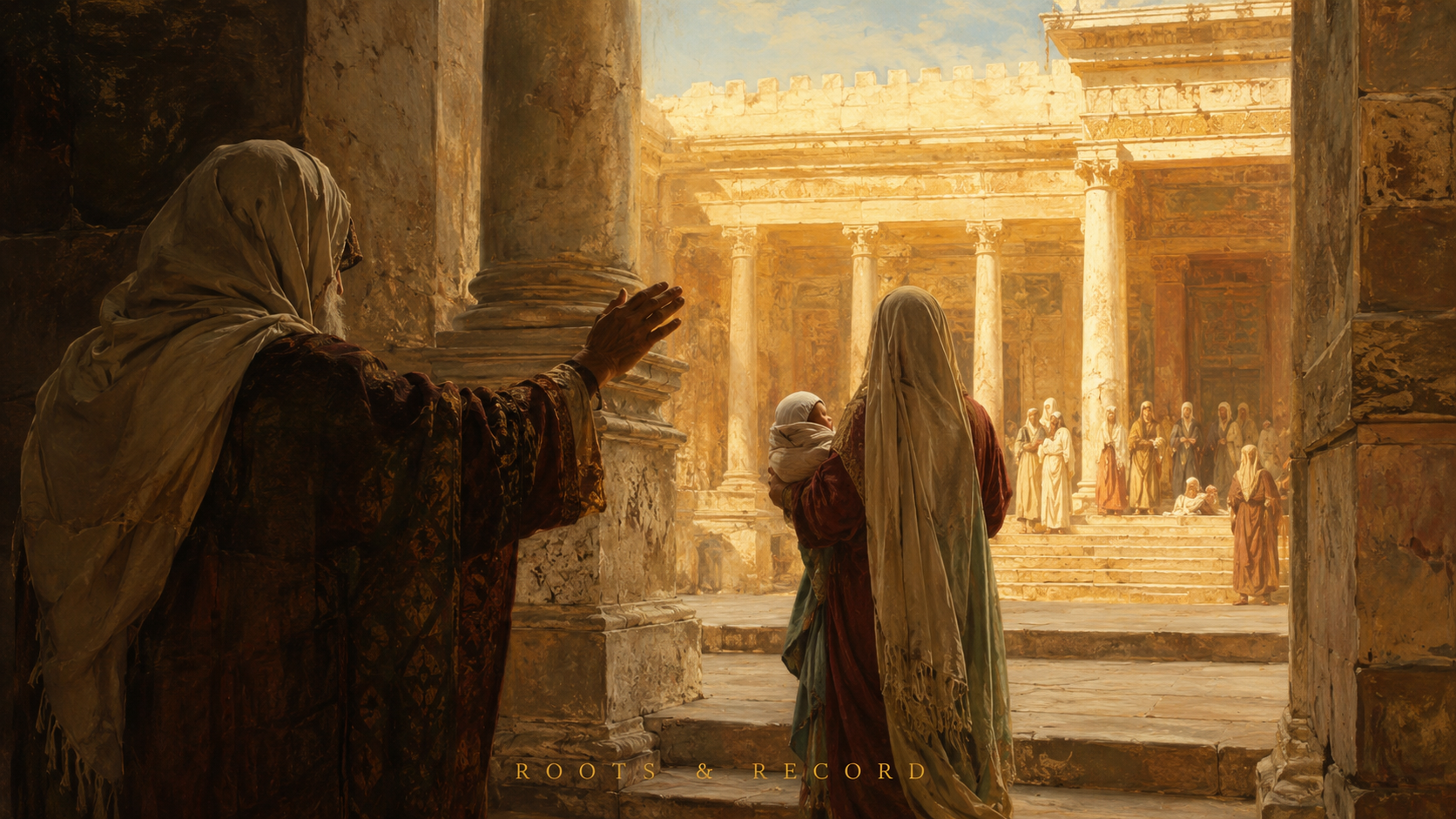
Mary of Nazareth receives the announcement that she will bear a son and responds with a question before she responds with consent: "How shall this be?" The angel waits for her answer. When the answer comes, it takes the form of a theological declaration: her Magnificat pulls down the mighty from their thrones, fills the hungry, sends the rich away empty. She draws on Hannah's prayer and on the Psalms and on the full prophetic inheritance of Israel, and what she produces is one of the most politically charged prayers in the entire biblical record. She is a woman of the tradition who knows its texts, prays in their language, and understands what the announcement means for the world she lives in. Elizabeth, her older relative, greets her arrival with a recognition the narrative treats as prophetic. Anna, an eighty-four-year-old widow who has not left the Temple for decades, is present at the presentation of the infant Jesus and speaks of him to all who are waiting for the redemption of Jerusalem. She is the first person in Luke's Gospel to proclaim Jesus publicly.
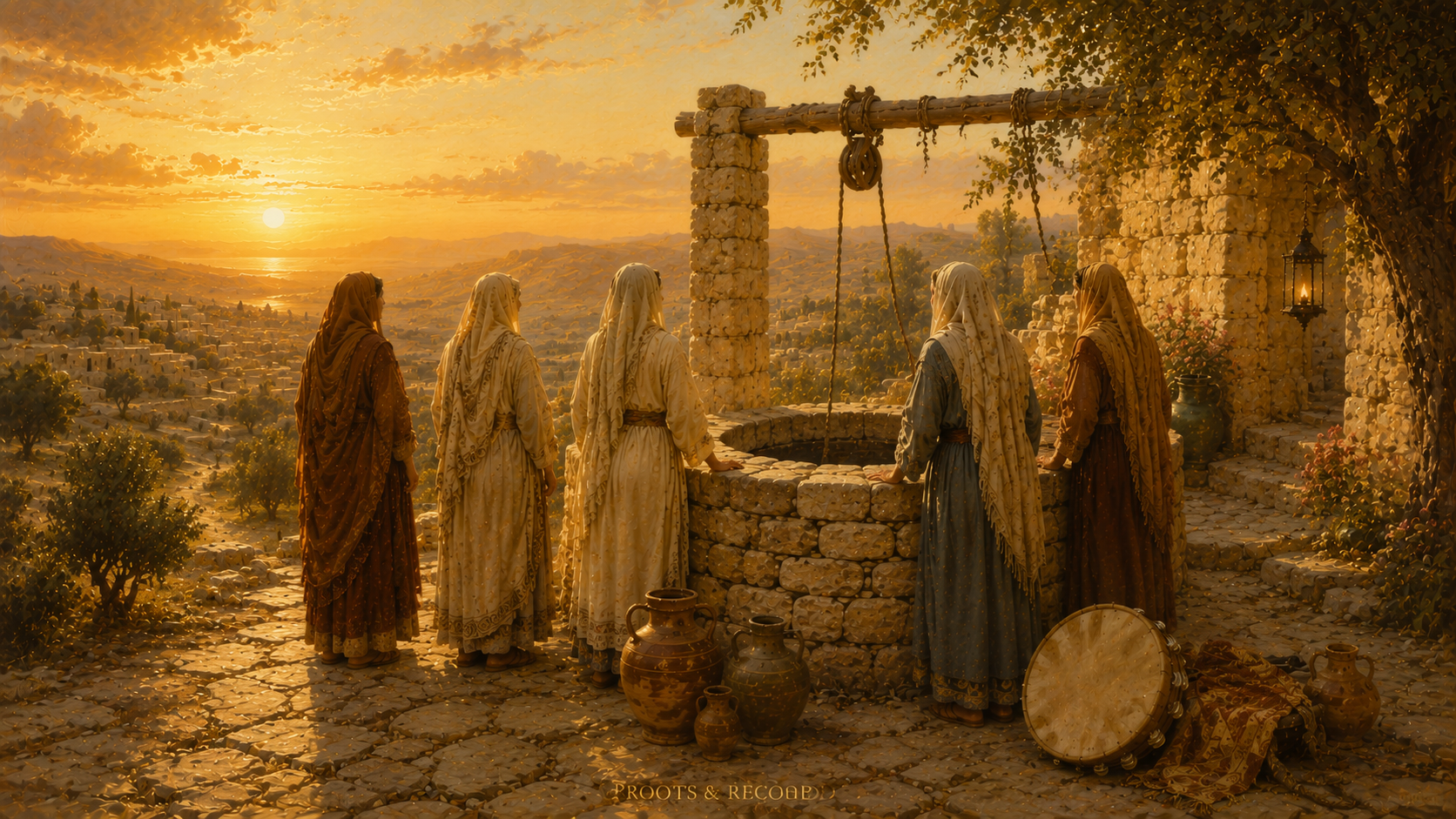
The Samaritan woman at the well has the longest recorded conversation with Jesus in any of the four Gospels. She argues with him, questions him, and goes into her city to bring people out to meet him, her testimony preceding his arrival. The woman with the issue of blood pushes through a crowd after twelve years of illness and social exclusion, and Jesus stops, identifies her, and calls her "daughter," the only person in the Gospels he addresses this way. Mary of Bethany sits at Jesus's feet in the posture of a disciple, a role not assigned to women in that world, and Jesus defends her choice when her sister objects. She later anoints his feet with costly perfume, and he tells those present that what she has done will be spoken of wherever the gospel is proclaimed (Matthew 26:13). Martha, her sister, receives the declaration "I am the resurrection, and the life" (John 11:25) in direct response to her own theological assertion, a form of engagement Jesus extends to very few.
A widow comes to the Temple treasury and drops in two small coins, the last she has. Jesus watches the wealthy making their contributions and singles her out above all of them: she has given more than any of them, he says, because they gave from their surplus and she gave everything she had to live on (Mark 12:41–44). The observation functions as a judgment on the economy of the Temple and a declaration about where real faithfulness lives.
Mary Magdalene stands at the cross, witnesses the burial, and arrives at the tomb before dawn. The risen Jesus appears to her first and sends her to the disciples with the news, making her the first person commissioned to announce the resurrection on which the entire subsequent tradition rests. The church has called her apostola apostolorum, Latin for the apostle to the apostles. Priscilla teaches Apollos, described as learned and mighty in the Scriptures, and her name appears before her husband's in four of the six references to the couple in the epistles. Phoebe is named a deacon of the church at Cenchreae and a patron of many, including Paul (Romans 16:1–2). Junia is named among the apostles (Romans 16:7). Lydia of Thyatira, a dealer in purple cloth, is the first recorded convert in Europe; her household becomes the first European church.
What the Record Shows
Across three thousand years of narrative, from the garden to the early church, the biblical record preserves women as agents: people whose choices, words, and actions drive the story forward, alter its direction, and shape the tradition that follows. They are not uniformly heroic because the tradition does not flatten its characters into types. They are present, complicated, and consequential. The text gives them full human weight and real influence, and in doing so takes them more seriously than most of the world that surrounded it ever did. The record is there. Reading it carefully is the work this section exists to do.
Sources
Primary Texts
Scripture quotations are from the King James Version (KJV).
Secondary Literature
None cited.